February 19, 2011

A Musical Review of the New World Symphony

There have been lots of architectural reviews (Witold Rybczynski likes it, too. See his review, Frank Gehry is Back, on Slate.)

More interesting is the review by the New Yorker's music critic, Alex Ross.  He looks at the building not as a work of architecture, but from the owner's perspective as a place that works for the students who are there, but as important, as a place that inspires new interest in classical music.  Apparently it fulfills both parts of the program beautifully.

As a performance space, the concert hall and the park are anything but "classical" and that seems to Ross to be a good thing. He was especially impressed with the quality of the sound in the outdoor sound system (167 speakers):
The [outdoor] speaker system has enormous impact, but without the fuzzy bloat typical of outdoor amplification. A few artificially beefy bass notes aside, it captures, to an amazing degree, the airy power of sound reverberating in space.
Outdoor speakers are in a series of tubes that rise from the landscape of the park.
An audio slide show is here. The article may or may not be available here. (The New Yorker is protective of their content.)

This is the kind of review that we need for museums.  It looks at how well the building fulfills the owner's program rather than focusing on the sculptural qualities of the building. Architectural reviews are useful, but they are only one part of the mix of what makes a building If only we had more museum reviews, like this one, that weren't focused primarily on the sculptural qualities of the building, especially one as ambitious and complex as this one.

Missed Connections at Boston's MFA

I was finally able to visit the new wing at Boston's Museum of Fine Arts last weekend. The architecture critics have hashed it over and, I think, generally get it right: It works well, but there is no passion there. (See Ada Louise Huxtable in the WSJ, for example.) The lack of passion perhaps means there is lots of room for art. The galleries are well proportioned, nicely lit, and the installations are just lovely. And, thankfully, my favorite paintings are now back on view.

A few notes:

Enviable circulation: The museum now has a circulation system that most large art museums would envy. Galleries flow out from the original central axis and it is remarkably easy to find one's way around. This is the beauty of several large additions (Pei and now Foster) instead of the hodge-podge of many small ones.

Atrium at the end of the day. Typically, it is filled with people.
Counters on wheels!
An Italian square in the middle of the museum: The new atrium space is inviting, despite the Foster-chill of slate, steel, and glass. It is used as a cafe during public hours, and was packed full of people and had a little of the feel of an European public square. That's good for visitors and the bottom line, but the best part of it is that all of the serving counters are on wheels.  Everything is modular and can be unplugged and rolled away (or reorganized) for the major events the space was designed for. It is, again, like that Italian square that is a local market in the morning (fish, veggies, flowers), a cafe at lunch and dinner time (tables and chairs), and a night club late at night (leather sofas, yes really, dance music, and soft lighting). I'd love to see it used as a market, but suspect that is not in the plans.
Air return vent

Techy note: The return air plenums are in the four-foot thick walls between the galleries. Peering through the grates, one can see to the top and bottom of the building.  The thick walls provide a nice transition between the galleries, but also act as giant air handlers.  It would be interesting to know more about Foster's thinking behind the building's systems.

Long, empty, corridor.
Missed connection: The missed connection is a place on two of the upper levels of the new wing called "Making Connections." This is an art learning space where they have some computer interactives ("What Style is It?" kinds of things) and small, but interesting, exhibits about the curatorial process. Sadly, the space is as disconnected from the galleries as possible, on the far east end of the building, off of the window-walled, wrap-around corridor that encircles the end of the addition.  It is a lovely space with very few visitors because the circulation within the galleries is so logical. The Making Connections gallery is recessed at the center of this long wall, so it is not visible from either end. It feels like someone wanted this space as far away from the art as possible. Could they not have come up with a more organic way to integrate learning spaces without disrupting the quite wonderful aesthetic experience that is the museum's principal attraction?

February 9, 2011

A Museum for the Un-museumed?


What would a museum be like that was designed from the ground up as a place for people who are not used to going to museums?
     It might look a lot like the church near Kansas City whose mission is to be "a church for the unchurched."
     The Heartland Community Church goes out of its way to eliminate the barriers that prevent people from going to church. Thinking about their site and building are central components of their approach. How is Heartland different from other churches?
  • Located in a former furniture superstore in the middle of one of Kansas City's "busiest retail centers" (their words), just off the highway and visible from 100,000 cars passing each day on I-35.
  • Surrounded by 1,100 parking spaces.
  • No mention of "church" in any of the signage.  What signs there are, simply say "Heartland."
  • A facade that is warm and welcoming–wood, trees, and lots of glass, ensuring transparency.
  • No religious iconography on the facade. No Christ on the cross, and, in fact, no crosses anywhere, inside or out.
  • A "welcome" booth near the entry staffed by volunteers.
  • A natural-light filled lobby that is designed to be 1.5 times as big as the room where the services take place so that people have a chance to socialize after the service. The building is 1110,000 square feet. The lobby is at least 20% of that and has multiple groupings of leather couches to further encourage people to linger.
  • A bookstore/gift shop and a small cafe with coffee service that also encourage lingering.
  • Large, clear signs identifying spaces, including the "auditorium," which is where services take place.
  • Inviting areas for kids that feel more like a play ground than Sunday School.
Much of this will sound familiar to museum-goers.  If they had areas called "Exhibits" or "Collections,"  I might have thought I was in a museum.
     The no-barriers approach continues with their customer service.  No one is ever asked for a donation during services.  You can wear what you want, come and go as you please, and are greeted with a smile wherever you are.  Despite the lack of  church-y visual messages, the service itself was what you might expect from a "good news" Christian denomination.
     Even for an unrepentant Yankee atheist, this felt like a very comfortable place to be.
     What can museums learn from this? Perhaps what it means to have an unrelenting focus on making the visitor feel welcome and a part of the community. To me, the most surprising thing is the huge lobby–doesn't church take place in the pews? It must cost a fortune to heat and cool that space. But the social part of church is clearly as important to Heartland as the spiritual part.  The church is meant to be a community center and the lobby gives them a kind of town square that is missing in many newer communities.
     Heartland worked with the Kansas City firm 360 Architecture who did a wonderful job on what must have been a tight budget (their portfolio has some lovely pictures).  The church clearly brought a very strong program to the design process.  The have some notes about the process on their web site.

The lobby with cafe tables to the right and auditorium behind the light well.


The bookstore
Sunday School entrance
Youth room

February 1, 2011

Igniting the Power of Art

According to the Dallas Museum of Art's PR department, over the past few years, the museum has had "a 100% increase in overall attendance and dramatic increases in the Museum’s visibility, membership, and public programming participation."

Sounds just like what every museum would like to see happen! What's the secret? A major new addition by a star architect?  Blockbuster exhibits? A major marketing campaign? Nope. Visitor Studies. While many museums spent the past decade or so planning, designing and building new buildings (or major additions to existing buildings), the DMA spent the 90s trying to better understand their visitors and reshaping their practices and programs to better meet audience and community needs.

Science centers and children's museums have long understood the value of understanding visitors, but this is the first time a major art museum has joined in. The DMA's new book documents their process:
Ignite the Power of Art: Advancing Visitor Engagement in Museum.

Reading the book and visiting the museum are now on my short list.

Bonnie Pitman talking about the museum:

January 24, 2011

Gehry's Latest in Miami Beach

The New World Center is remarkable because it defies all of the Gehry stereotypes.  Sure, it has swoopy forms, but they are mostly contained within a big, practical, rectangular box that might even be called contextual in white-stucco-happy Miami Beach. Perhaps this is not a "new" Gehry, however, but a Gehry working within the constraints of the program, site, and budget, and pleased to be doing so. One of my favorite museums is the Norton Simon in Pasadena, redesigned and updated by Gehry years ago.  It, too, defies the Gehry stereotypes (even the old ones) and is a simple, building with delightful galleries and a wonderful openness to the outdoor space that the u-shaped building surrounds.

The New World Center brings the same kind of simplicity together with the expected dynamic forms, but the building is clearly about more than just form. Gehry describes it as a "program driven building" designed to engage younger audiences with classical music.  This is no palace to music, like the Disney Hall or even Lincoln Center, but an open, inviting place with a huge glass wall and a lobby open to the public during the day. The music from concerts in the hall will be piped live into the adjacent (and lovely) park and video will also be projected onto the flat white wall that faces the park. This will be a popular destination for more than the well dressed and well funded.

Too often, architects see museum as a chance to design a cathedral.  Concert halls are similar places (see Rybczynski on this). Unlike a cathedral, which is meant to awe, the New World Symphony building inspires, but also welcomes visitors at every opportunity.

I would love to see the same balance of inspiration and accessibility applied to a museum building.

Links:  NY Times (the photo is theirs) and Miami Herald

December 9, 2010

A Visit to the Museum from the Loan Officer


On the night before Xmas, throughout the museum
‘Twas totally quiet, a damn mausoleum;
The offices empty, except for our claimants,
All because, gosh, we were late on some payments.
(OK, so we’d stretched when we took that last loan,
But it was so easy! Just pick up the phone,
And voila! A mortgage so big and so splendid,
More money than any trustee comprehended.
It bought us a curvy new Gehry addition
The pinnacle of our director’s ambition.

But now, stroke of midnight, the loan had come due,
And I knew that our mortgage wouldn’t pass peer review.
Hark! There was Loan Santa, cigar in hand,
Over the rooftop, preparing to land.
Skidding across our titanium curves,
I heard him cry out with great gusto and verve:
“Now Buffet! Now Volker! Now Merrill and Lehman!
Come on Fannie Mae! On Greenspan, and Krugman!”
Out he leapt, landing square on his Pucci-clad feet
“Hallo,” He called out “I’ve come straight from Wall Street!”
“Fear not!” he continued, “I’ll not let you default,”
And plunged down the vent with a grand somersault.

Scrambling inside I found him in collections,
Tallying objects, noting his selections.
The fluid collections provoked an epiphany:
“These could hasten your early return to liquidity!”
He poo pooed taxidermy; the conclusion was tacit:
Preserved with arsenic they were—toxic assets.
The fossils were tagged for early foreclosure
“We’ll sell them,” he cried, never losing composure.
“In China I know that they’ll fetch quite a penny,
So don’t ask which ones, just ask me ‘how many?’”
He explained that auctioning New Guinea weaponry
Would help to defray that negative equity.

He enthused over panthers whose shipment was pending:
“Now that’s what I call predatory lending!”
He gathered our registrars, deployed in swarms,
And put them to work auto-signing his forms.
“I know” he observed, “You’re all working part time”
“You should have been leery of that term ‘sub-prime.’
Curators linked arms, defending the vault.
“Oh really,” he sneered, “would you rather default?”
I cried that his moves were moral abrogation
“Nonsense,” he demurred, “financial innovation.”
“Would you rather have squatters lay claim to your foyer?
Be sued by your broker, not to mention your lawyer?”
And opined, packing specimens into his crate
“You should have avoided ‘adjustable rate.”

When the shelves were all bare, file cabinets empty,
The museum pillaged from attic to entry,
He brushed himself off and leapt onto his sled
Checked the straps, grabbing one last axe head.
Looking me in the eye he sagely concluded
“Its your lust for grand space that left you denuded”
I heard him cry out, fleeing into the night:
“Here’s my advice to all--next time rent it outright!”

August 25, 2010

Cathedrals of Culture?

The Wall Street Journal continues to break down art museum stereotypes with a long piece on the new generation of art museum directors and their increased sensitivity to their communities.

The notion that museums are no longer "Cathedrals of Culture" is not new for most museums, but the ways that art museums are beginning to reach out are remarkable, for these typically most conservative of museums.  The charge, not surprisingly, is being led by contemporary art museums. like the Walker, but the attention such programming is getting is good for the whole museum community.

August 18, 2010

Visitor Studies is finally getting some love!

The Wall Street Journal has a good piece focusing on the Detroit Institute of Arts' visitor studies program called The Museum is Watching You.

It is wonderful to see visitor studies and evaluation finally getting some recognition in the mainstream press, but it is sad that it is apparently only getting covered because art museums are now doing it.

 One quibble: I am quite sure that the author's suggestion that "many museums dedicate 10% of their operating budgets to evaluation" is not true. The one museum he cites may well do so, but surely that is an exception.

“It is a drunken orgy and they are all having sex!”

The Financial Times had a good piece about the Metropolitan Museum's new director Thomas Campbell. (He's not really so new, but in museum-staff-turnover time 2 years counts as a rank newbie). The interesting bit comes about halfway through:
We assume a great deal of knowledge in our audience; I’m conscious that we need to do more for our general visitors.
We assume people know who Rembrandt is, for example. We have wonderful, thoughtful labels next to each Rembrandt painting, but there’s no overview of who he was and, frankly, considering our international audience, I doubt whether many of them do know who [he] was, or the significance of a particular period room, in a broader context.  
"What I’m trying to do is to get the museum rethinking the visitor experience from the moment that people arrive at the museum: the signage they encounter, the bits of paper they pick up, all the way through to the way we deliver information in the galleries. And obviously that’s an enormous task. We’ve got a million square feet of gallery space and tens of thousands of objects on display, so nothing’s going to change overnight.
Campbell seems committed to maintaining the Met's scholarly reputation,while also allowing that perhaps all of us are not quite up to the same level and may need a little more explanation, or perhaps just some plain speaking.  What about the drunken orgy? There is a story here about Campbell's own education:
an Italian teacher at Christie’s who once asked him to describe a Titian bacchanal and, after Campbell had groped for a succession of scholarly terms, admonished him with an explosion of plain speaking: “It is a drunken orgy and they are all having sex!”
Sounds like the right guy for the job.

April 8, 2010

Revising Temperature and Humidity Standards

Max Anderson argues convincingly for relaxed standards for temperature and humidity control for museum collections, noting that current research does not show any adverse affects with fluctuations of humidity from 35% to 65% and temperature from 52 to 88 degrees fahrenheit.  Relaxing the current strict standards would both make loans and exchanges easier, but also significantly reduce costs for HVAC and reduce carbon emissions.

The "gold standard" of strict 70 degrees fahrenheit and 50% (or 55%) relative humidity is only possible with expensive humidification and dehumidification systems (which suck up a lot of power) and require very careful detailing of the building envelope in order to the building itself. Perhaps the costs associated with a changing climate will accelerate the discussion.

This is not a new idea. We have talked about the value of strict temperature and humidity control and the challenges of vapor barriers here before, but it is good to see the discussion getting more attention.


Update:  Here are several other interesting discussions:

The Nothern States Conservation Center on Relative Humidity and Temperature


A piece posted by the National Archives by the father of this discussion, Ernest Conrad: The Realistic Preservation Environment

And here is a good, if technical, discussion of the challenge of Humidity Control in the Humid South.

January 27, 2010

The Airstream Museum


The NY Times has a piece about a novelist who has "a traveling museum of oddities and handmade optical illusions." The article is mostly about his work as a writer, but it reminds us that a museum doesn't have to be a building, or even in a fixed place. Plus, I like the photo.

January 5, 2010

"Artists contend with Libeskind"

No comment is really necessary about this article from ARTINFO:
Daniel Libeskind’s 2006 addition to the Denver Art Museum (DAM) is a difficult building to like. It greets visitors with an empty, cavernous lobby and houses galleries with bizarre geometries and sloping walls, features that make it almost impossible to show art coherently, despite the heroic efforts of curators. It is a design that at times seems determined to displease. The museum has decided to confront this architectural awkwardness by commissioning 17 contemporary artists to craft site-specific works in response to the new building. . . .more
It should at least be an interesting exhibit.

January 4, 2010

New Zaha Hadid Museum

I missed this one in the holiday hectics. Zaha Hadid is designing a new art museum for Michigan State University with significant funding from Eli and Edythe Broad.  The ArchTracker web site has a few renderings and quite a nice fly-through of the design concept. It looks somewhat like Libeskind's Denver museum, but perhaps with a few more walls that are plumb enough to hang a painting. With a project budget of $40 to $45 million they may just have enough money to make the project happen. Last week's issue of the New Yorker (Dec. 21, 2009) also has a good profile of Hadid by John Seabrook.  The best part is that I finally have some sense of what "tektonic" means.

December 15, 2009

Assessing the Museum Building Boom

Check out the very good post over at CultureGrrl on the recent NY Times coverage of the aftermath of the museum building boom.  She recognizes that while there have been high profile problems, many museum building projects have been successful and that others are still in the works, just moving slower than they were.

Update: CulturalGrrl has an update with details on four museum building projects which are still underway, many taking advantage of very favorable construction costs.

December 3, 2009

Museum Patterns


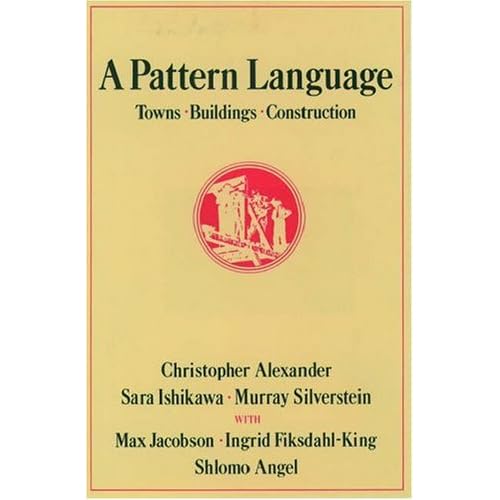
Christopher Alexander, architect and author of A Pattern Language, recently received the Vincent Scully Prize from the National Building Museum in Washington, DC.  The prize recognizes "exemplary practice, scholarship or criticism in architecture, historic preservation and urban design." They note that "for nearly 40 years [Alexander has] challenged the architectural establishment, sometimes uncomfortably, to pay attention to the human beings at the center of design."

He may well have challenged the architectural establishment, but the architectural establishment has largely ignored that challenge. The architectural theory taught in the major architectural schools largely ignores human beings and their needs. Witold Ryybczynski has a good analysis of this in his most recent Slate column.

I've long been a fan of Alexander for just this reason–he thinks about how we shape space around people and their needs. Every architect will say "of course the building is designed for the people who use it." But too often, the aesthetic "needs" of museum visitors trump their actual need for a place that is inspiring, but also welcoming, comfortable, and easy to navigate.

I have often thought it would be useful to assemble Alexander-style patterns for museum buildings, with a particular focus on visitors.  There are certainly already organizational tropes that we see everywhere, the store on the right at the exit being one of them, but real patterns would add a human dimension to museum design that often seems missing.

November 11, 2009

What is old is new again


Despite working in Boston for ten years, I had never been to the Harvard Museum of Natural History. I visited two weeks ago and what a treat it is, like a trip back to an earlier world of museums.  The museum doesn't ramble like the the American Museum of Natural History in New York, but despite its much smaller size it packs in almost as much experience.

Contemporary museum exhibit practice is to give artifacts lots of space.  This happens for lots of reasons–a desire to focus attention on the object, a design aesthetic that values negative space, and, sometimes, a paucity of worthwhile objects. This is not the case at Harvard's museum.  The place is stuffed with great stuff, as you can see in the photo of the mammal room where the poor giraffe must share airspace with the right whale.

Many of the labels are hand typed and often include just enough description to give the object a little context.  Unlike contemporary exhibits, where the narrative is clear and the messages direct, the simple taxonomic organization of most of the exhibits at Harvard lets visitors discover as they go. This is the best kind of constructivist learning; there is a constant sense of discovery.  I especially liked the on duck in a case full of extinct birds where, at the very end of the label, in small type, it said "this is perhaps one of the museum's greatest treasures."

It is difficult (and perhaps unwise) to glorify the "cabinet of curiosities" approach to museology as it must have gone out of fashion a hundred years ago, but here is an instance where the old ways may well inspire visitors better than the new.  Of course, few other museums have the richness and diversity of the Harvard collections and it is the quality of the specimens as well as their volume that creates the sense of wonder and discovery.


The recently renovated Natural History Museum in Paris (if 1994 is still recent) creates a similar effect with the centerpiece Grande Galerie de l'Evolution featuring dozens of mammals parading through the three story atrium. This contemporary exhibit inspires the same sense of wonder as the Harvard Museum. It is beautiful, but without at least a little bit of context, it seems empty, even meaningless.  Little typed labels would distract from the aesthetic, but they might enhance the sense of wonder.

The Harvard Museum of Natural History is a reminder that despite our desire that people come away from a museum visit having learned something, perhaps the one thing they learn is that they want to know more.

This was certainly the outcome for me. I picked up a copy of The Rarest of the Rare: the Stories Behind the Treasures of the Harvard Museum of Natural History, which is almost as wonderful as the museum itself. Interestingly, the Abraham Lincoln Museum in Springfield, Illinois has the same effect on people, despite having a paucity of artifacts.  The museum store keeps a pallet of Lincoln biographies in the center of the store. I bought one of those, too.

October 27, 2009

The End of an Epoch?

Nicolai Ouroussoff has an interesting piece in the NY Times. It is titled "An American Architectural Epoch Locks Its Doors," and would seem to be about the end of the era of architecturally exuberant public buildings. Not surprisingly given Ouroussoff's own longstanding exuberance for innovative architecture, the article turns out to be an subtle defense of such buildings.

Ouroussoff argues persuasively that a wide variety of architectural expressions can help to create a richer and more engaging city, especially if they are part of a larger, community-centered urban plan.  He cites Chicago's astonishingly successful Millennium Park as the prime example with its Gehry and Piano's buildings facing off across a park that has intimate connections to a city with a history of architectural innovation and diversity.


As usual, the failures are more instructive than the successes. He cites Dallas' ambitious arts district as a place that still has not succeeded, despite buildings by Foster, Koolhaas, Pei, and Barnes.  He says:
What the planners could not easily overcome was the scale of destruction [of the old neighborhoods], and the resistance many felt toward breaking down old barriers. Nearly 30 years after the plan was unveiled, most of the commercial lots remain empty. And the divisions that continue to separate this enclave of high culture from the nearby communities remain deep.
To Ousousoff the epoch that is over is not one of architecturally distinctive museums, but one where such buildings operate in isolation from their communities. He is convincing when he argues that we need to recognize that architecturally significant buildings must work together with the city's existing urban infrastructure, neighborhoods, and communities in order to succeed.

While subtly defending what some would call "starchitecture," Ourousoff also acknowledges that sometimes exuberant design goes wrong:
The problem with freedom, after all, is that it allows for horrifying imaginative failures as well as works of stunning genius. When artists fail, you can ignore their work. When architects fail, you walk by their buildings every morning on your way for coffee shaking your fist. (The Milwaukee and Denver art museums come to mind.)
Going for a dramatic design and getting it wrong is one risk that museum planners need to assess.
Almost as bad is to have successful design that doesn't fit the community, especially when the real new "epoch" of museum planning is one that is driven by community. As Ouroussoff reminds us, planners need to think well beyond the museum building itself and really understand how the building and its programming engage the neighborhood and serve the local community.

October 6, 2009

The Barnes Museum new design is unveiled


The conceptual design for the new Barnes Museum in Philadelphia has been released, not without controversy, of course. The Barnes is the quirky museum with an astonishing collection of impressionist art that is currently housed in a specially designed building in suburban Philadelphia.  Barnes, like Isabella Stewart Gardner, wanted his collection to remain as he left it, displayed in the building designed for it. The probate court has authorized the Foundation to move the collection to a new building in downtown Philadelphia, where it will be more accessible and generate more revenue to support operations.

The design itself, by Tod Williams and Billie Tsien, seems remarkably restrained. It attempts to create a garden in the city, similar to the experience of visiting the current museum. They will even replicate the current galleries and hanging locations.

If it wasn't the Barnes, it might be easy to say that I like it.  It seems sensible, clear, and well organized (given the detail that can be seen in plans that are designed for a site plan review).  From a visitor's perspective, the new location will be a boon. Many more people will get to see the art in a setting similar to the original.

But, in the world of art similar to the original isn't the same thing as the original. To Barnes, the garden, the gallery and the art were a unified whole, something to be experienced together--in many ways the combination was a work of art in itself. Recreating the galleries can never recreate the full experience that Barnes intended. The art itself might be more accessible, but the experience of the collection will never again be what Barnes envisioned.

On the other hand, the Barnes Foundation's successful argument to the court was that there was no way to maintain the current facility without additional revenue and other support that would be earned at the new location.

There has been strong opposition to the move and the court case was in the headlines for many months. The opposition will continue as the design works its way through Philadelphia's approval process.  Philadelphia architect Robert Venturi is strongly opposed to the move, as outlined in an article in the LA Times, which also quotes Henri Mattisse who "described the ensemble of architecture, art and gardens as 'the only sane place' for aesthetic experience that he had seen in America."

It appears that the move is inevitable and the planner in me wants to like it, but I will be sure to see the collection in its original location before the new building is completed.

Update:  A thoughtful preliminary review by Inga Saffron in the Inquirer and a better slide show with more renderings.


Update 2: Nicolai Ouroussoff of the New York Times hates it. They also have a slightly different slide show.


Update 3Witold Rybzinski weighs in. (He's not particularly happy with it.)

New Name for the Blog

When I began writing these occasional posts, I wanted to focus on museum architecture.  As it turns out, my interests in those two topics reach into many other areas related to museums, particularly how visitors respond to a museum and its exhibits and programs, and the economic ramifications of the decisions that museums make about their visitors and their buildings.   Oddly enough, these same issues are the ones I deal with in my work. It now makes sense to align the blog and the work more closely, hence the new name and broader scope of interests.

We'll still have a strong focus on architecture, but you can expect more diverse postings about a variety of museuological issues.

September 15, 2009

Museum Metrics

A post over at Real Clear Arts got me thinking once again about museum metrics.  The author suggests that attendance is the principal measure of success for museums, at least in the eyes of those outside museums. Those of us who work with museums know this is not the case, but here, as in many things, perception trumps reality.  I posted a response citing the on the Real Clear Arts site, but thought a few of those links would be helpful here as well, especially give the focus of my last two posts.

Max Anderson, the Director of the Indianapolis Museum of Art has thought a lot about museum metrics. His museum's "Dashboard" is a model of clarity and depth of information:
His article The Metrics of Success in Art Museums is the best summary of different kinds of museum metrics. It is available through the Getty Leadership Institute web site, where a number of other good articles are also available.
Here is an excellent, if academic, overview of thinking about the issue of measuring success in museums, which includes Anderson's work: Achieving excellence: Investigation into the use of performance indicator in museums by Alessia Zorloni.
The Visitor Studies Association has long been a leader in helping museum understand visitors, although their focus is more often on exhibit evaluation than overall measures of success:
The museum associations have also been active in this area, establishing benchmarks to use. One example is the Association of Children's Museums' Children's Museums Metrics Reports, which proived a massive amount of data. Jim Collins in Good to Great and the Social Sectors puts his finger on the core issue:
The critical question is not "How much money do we make?" but "How can we develop a sustainable resource engine to deliver superior performance relative to our mission?"
The field of museum metrics has a long ways to go, but it is also much more sophisticated than one might suspect. The biggest issue is that every museum needs to find benchmark museums that are truly comparable (often a challenging task) and establish metrics for its own success that are related to its unique mission and vision.

Why do people visit art museums?

This entry in the Miller-McLure blog summarizes a new study from the University of Rome, just published in the journal Psychology of Aesthetics, Creativity and the Arts. The study finds that
viewing works of art engages both the mind and heart. But whether a museum visit is primarily an intellectual or an emotional activity depends upon the type of art on display, and the era in which it was created. . . . The research team reports that visitors to a museum housing ancient art tended to describe their experience in cognitive terms, while those at a modern art museum were more likely to report they were emotionally engaged.
It would be interesting to apply this methodology to the Nelson Atkins visitors mentioned in the previous post.

September 14, 2009

Looking back at the Nelson Atkins Addition

In a short interview on the Modern Art Notes blog (Part One and Part Two), the Nelson-Atkins Museum's retiring director Marc Wilson talks about the museum's new Stephen Holl-designed wing.

Wilson is a man after my own heart as he emphasizes two things: that you need to for a successful in a building project: 1) to be a strong client and 2) that community participation is critical to success.
In terms of our goals, [the addition] has met every single goal and there's nothing we would change. I think that's an unusual statement. We did our homework and I think so far as the architecture goes we were an exceptionally strong client.
With such an assertive design, and such a strong architect, it is essential to be a strong client and to advocate for the museum's and the visitor's needs. One way to do that is to deeply involve the community in the process, as they apparently did:
From the beginning, the building project had tremendous community participation. It wasn't just the director and a couple people. We interviewed 250 people. We went to our market cities like Wichita and Omaha and we talked to taxi drivers and teachers and patrons and so forth. It had broad input and that helped us end up with our goals.
And response to the new wing is measurably positive:
The guards have a stopwatch and we can track how much time people are spending with certain works. In the [new wing] they are spending about three times as much [as in the 1933 building] and we're loving that.
More controversial may be his notion that visitors have changed:
I think audiences have abdicated their responsibility and put the success of their experience on the institution, on the producer, on the musician, the orchestra or whomever. They don't seem willing to take into account their level of preparation, their willingness to exert of themselves. I think that's a huge change.
Perhaps it isn't the visitors that have changed, but our understanding of our visitors. The traditional museum visitor (affluent and classically-educated) comes to a museum with a certain background and perspective. New audiences (more diverse, less affluent, differently educated) are going to come to the museum with different needs and expectations. Meeting these new visitors on their own terms will be critical to the long-term success of the museum.

August 14, 2009

Ben Davis on the Bilbao Effect

Ben Davis' piece Glass Houses is a couple of years old (and is somewhat misguided in dumping on Toledo), but is prescience about the real effect of the "Bilbao effect."
The height of "gravity-defying" artistic hubris in recent years has been the Bilbao Effect – the phenomenon of "destination architecture," with cities focusing investment in showpiece cultural institutions as part of urban renewal schemes, trying to clone the rejuvenating effect that Frank Gehry’s Guggenheim had on industrial Bilbao. . . .

The "Bilbao" formula has had wide success because it brings together a progressive-sounding rhetoric about civic investment with means that are appealing to the wealthy and the established. Today, with income disparity in the U.S. as high as it has been since right before the Depression, the lesson . . . is that, until investment in culture is wed to a more sane economic investment for all, the strategy is like an urbanist version of the Atkins Diet: It may produce quick, superficially pleasing results; it also starves you of needed nutrients, hurts your heart and makes you stink.
I found the reference to this story in a new piece: The Museum Bubble, which is also worth a read.

More on the Guggenheim at 50


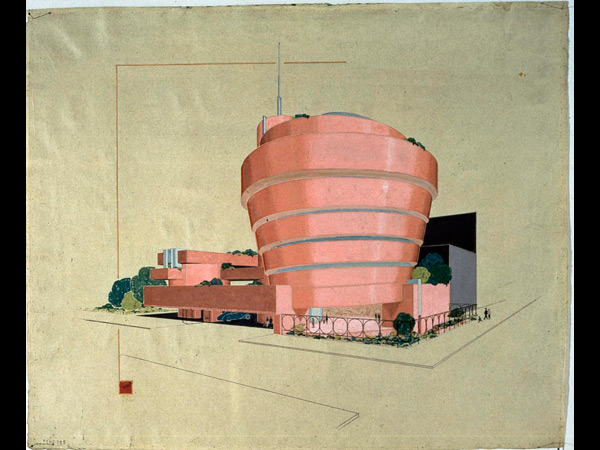
Slate has a very good historical slideshow about Frank Lloyd Wright and the growth and development of the Guggenheim Museum. The focus is unusual as it is as much on the development of the collection as it is about the building itself.

It is astonishing that a museum that is 50 years old still generates controversy, but in many ways the Guggenheim is ur-project that posed the question we still wrestle with: Which comes first, the art or the architecture? It is not surprising where Wright comes down:
architecture is "the Mother-art of which Painting is but a mere daughter"
Artists, and some curators, might differ, as they did, vociferously, when the Guggenheim first opened.

August 11, 2009

Engaging Audiences


This is somewhat off topic, but perhaps is more pertinent than it seems. If we are building museums, it is critical to understand who the museum is for.

The Wallace Foundation's new report on Engaging Audiences focuses primarily on performing arts organizations, but many of the lessons are equally applicable to museums. Much of this is not new, but the report is direct and succinct nd well worth circulating.

August 7, 2009

Gehry on throwing architecture under the bus

Frank Gehry is quoted in an NPR story about the 50th anniversary of the Guggenheim Museum in New York. The story is worth reading on its own as it describes the impact the Wright's design had on the museum world. Most interesting, though, are Frank Gehry's comments at the end:
. . . the architect says, it's getting harder to build works with "spirit, passion and feeling."

"I think that throwing architecture under the bus is being touted by the people who can't do the other," Gehry says. "And this is a great excuse to trash those who can, and say we're through with those guys, and now we're going back to straight simple, minimalist, idiocy again. Cold simple sterility. It's got to be green, though! As long as it's green, you're OK."
I agree that it would be sad to see a return to "straight simple, minimalist, idiocy." But I also think it would be wonderful to achieve more balance, to move past the truly idiotic notion that every new museum must be a unique architectural expression. It would be delightful if every museum could be designed by the likes of Gehry, but even among the architectural luminaries, few can compare with his mastery of both form and function. A few more simple green boxes would meet the needs of many museums and their users at considerably less cost than the bloated attempts at artistic expression that have hobbled some museums.

August 4, 2009

The Future of Museum Architecture?

A recent piece in the NY Times described the conversion of a grain elevator into an art gallery. (“About the only thing we can’t offer, is white walls.”) With the debunking of the "Bilbao Effect" myth that hiring a star architect can transform any city, is this an indicator of a possible return to a more inventive kind of architecture that is rooted in the needs of artists and visitors (rather than the egos of community leaders)?

One of my favorite recent museums continues to be MassMOCA in North Adams, Massachusetts. Not because it is great architecture, but because it is an interesting and surprising place to experience art. Rather than creating a grand statement--"This is architecture" as the new starchitect museums do, MassMOCA encourages dialog between artists and the buildings. This dialog then extends to the visitors and invites them to join in the discussion, rather than simply stand back in awe of the art, or, in too many cases, the building.

Engaged dialog is certainly a more contemporary (and less Medieval) expression of the ways our social discourse is evolving. Facebook and all the other Web 2.0 technologies are transforming the ways people engage with each other and with the organizations and activities they enjoy. Museums are beginning to get on board in digital space ("follow us on Twitter!"). Perhaps the grain elevator project is the latest manifestation of a new, more personal, way of thinking about engaging people with art in physical space?

May 22, 2009

Guggenheim Lego Set!

OK, this is perhaps not quite on topic, but I can't resist. Lego has begun to release a new series of sets celebrating architecture including Frank Lloyd Wright's Fallingwater and the Guggenheim Museum. Info about the sets is here on the Wired Gadget Blog.

April 30, 2009

Witold Rybczynski on the new Smithsonian African American Museum

Witold Rybczynski has an interesting slideshow in Slate on the competition entries for the new African American Museum. He concludes that the winning design "manages to appear both primal and modern and, in some ineffable way, seems right for an African-American museum—respectful of the Mall, yet standing slightly apart."

April 22, 2009

Earth Day: Sustainable Museums Everywhere

Virtually every museum construction project is either going for "green design" or a full LEED rating. As community leaders, this only makes sense. One of the lesser know facts about the LEED system is that you don't have to build a new building or even renovate an old one to become LEED certified. The LEED for Existing Buildings rating system provides guidelines for operations and maintenance that will make an existing building more efficient.

I am reminded of this because I got a message today from president of the US Green Building Council today with an Earth Day challenge for every member:
I’d like to challenge each and every member of USGBC to identify an existing building within your own portfolio to green. Start with the LEED for Existing Buildings: Operations & Maintenance checklist, identify the low-cost/no-cost improvements, and get on the path to greater gains.
The challenge is especially interesting because he poses it in the context of the economic downturn, asking "Has the economic crisis crushed the green movement?" The answer is "No!" Rather, it is a real opportunity to talk about the economic value of going green.
Adobe Systems Inc. is saving $1.2 million annually and getting a 121% ROI on their commitment to green operations and maintenance. How much can you put back in your bottom line?
Information about LEED for Existing Buildings is available here: LEED for Existing Buildings. The checklist is here: LEED EB/OM Checklist. (Note that the checklist is the current version which will be replaced April 27th with the roll out of LEED Version 3.0.)