Showing posts with label museum architecture. Show all posts

October 27, 2009

The End of an Epoch?

Nicolai Ouroussoff has an interesting piece in the NY Times. It is titled "An American Architectural Epoch Locks Its Doors," and would seem to be about the end of the era of architecturally exuberant public buildings. Not surprisingly given Ouroussoff's own longstanding exuberance for innovative architecture, the article turns out to be an subtle defense of such buildings.

Ouroussoff argues persuasively that a wide variety of architectural expressions can help to create a richer and more engaging city, especially if they are part of a larger, community-centered urban plan.  He cites Chicago's astonishingly successful Millennium Park as the prime example with its Gehry and Piano's buildings facing off across a park that has intimate connections to a city with a history of architectural innovation and diversity.


As usual, the failures are more instructive than the successes. He cites Dallas' ambitious arts district as a place that still has not succeeded, despite buildings by Foster, Koolhaas, Pei, and Barnes.  He says:
What the planners could not easily overcome was the scale of destruction [of the old neighborhoods], and the resistance many felt toward breaking down old barriers. Nearly 30 years after the plan was unveiled, most of the commercial lots remain empty. And the divisions that continue to separate this enclave of high culture from the nearby communities remain deep.
To Ousousoff the epoch that is over is not one of architecturally distinctive museums, but one where such buildings operate in isolation from their communities. He is convincing when he argues that we need to recognize that architecturally significant buildings must work together with the city's existing urban infrastructure, neighborhoods, and communities in order to succeed.

While subtly defending what some would call "starchitecture," Ourousoff also acknowledges that sometimes exuberant design goes wrong:
The problem with freedom, after all, is that it allows for horrifying imaginative failures as well as works of stunning genius. When artists fail, you can ignore their work. When architects fail, you walk by their buildings every morning on your way for coffee shaking your fist. (The Milwaukee and Denver art museums come to mind.)
Going for a dramatic design and getting it wrong is one risk that museum planners need to assess.
Almost as bad is to have successful design that doesn't fit the community, especially when the real new "epoch" of museum planning is one that is driven by community. As Ouroussoff reminds us, planners need to think well beyond the museum building itself and really understand how the building and its programming engage the neighborhood and serve the local community.

September 14, 2009

Looking back at the Nelson Atkins Addition

In a short interview on the Modern Art Notes blog (Part One and Part Two), the Nelson-Atkins Museum's retiring director Marc Wilson talks about the museum's new Stephen Holl-designed wing.

Wilson is a man after my own heart as he emphasizes two things: that you need to for a successful in a building project: 1) to be a strong client and 2) that community participation is critical to success.
In terms of our goals, [the addition] has met every single goal and there's nothing we would change. I think that's an unusual statement. We did our homework and I think so far as the architecture goes we were an exceptionally strong client.
With such an assertive design, and such a strong architect, it is essential to be a strong client and to advocate for the museum's and the visitor's needs. One way to do that is to deeply involve the community in the process, as they apparently did:
From the beginning, the building project had tremendous community participation. It wasn't just the director and a couple people. We interviewed 250 people. We went to our market cities like Wichita and Omaha and we talked to taxi drivers and teachers and patrons and so forth. It had broad input and that helped us end up with our goals.
And response to the new wing is measurably positive:
The guards have a stopwatch and we can track how much time people are spending with certain works. In the [new wing] they are spending about three times as much [as in the 1933 building] and we're loving that.
More controversial may be his notion that visitors have changed:
I think audiences have abdicated their responsibility and put the success of their experience on the institution, on the producer, on the musician, the orchestra or whomever. They don't seem willing to take into account their level of preparation, their willingness to exert of themselves. I think that's a huge change.
Perhaps it isn't the visitors that have changed, but our understanding of our visitors. The traditional museum visitor (affluent and classically-educated) comes to a museum with a certain background and perspective. New audiences (more diverse, less affluent, differently educated) are going to come to the museum with different needs and expectations. Meeting these new visitors on their own terms will be critical to the long-term success of the museum.

December 17, 2008

Museum Architecture on NPR

 NPR has an excellent story on museum architecture. It features two buildings by Daniel Libeskind, the Denver Art Museum and San Francisco's Contemporary Jewish Museum.

July 1, 2008

"The Perils of Museum Design"


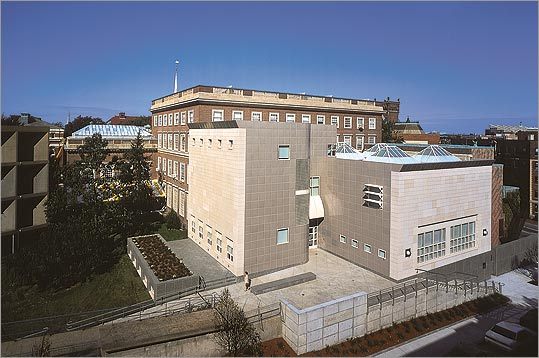
The Boston Globe has a good piece entitled "The Perils of Museum Design" on the vapor barrier problems at Harvard's Otto Hall, home to the Busch Reisinger Museum. Otto Hall is slated to be torn down to make way for a new Renzo Piano addition to the adjacent Fogg Museum.

Otto Hall was built in 1991 with state-of-the-art temperature and humidity control systems. Unfortunately, this was before architects and engineers fully understood how to keep escaping humidity from damaging the building envelope. Apparently the damage to the building was bad enough that it might have been torn down even without the Fogg expansion. Unfortunately, this kind of problem still happens with newly built museums, but seldom makes the national news. 

A relatively good discussion of wall systems can be found in this educational piece for an air barrier company.

Update:  Sadly, these links are out of date. Here are several other interesting discussions:

The Nothern States Conservation Center on Relative Humidity and Temperature


A piece posted by the National Archives by the father of this discussion, Ernest Conrad: The Realistic Preservation Environment

And here is a good, if technical, discussion of the challenge of Humidity Control in the Humid South.


March 18, 2008

The new "Newseum" in Washington, DC


On a recent visit to DC to make a presentation at the Building Museum conference I was fortunate enough to get a pre-opening tour of the the brand new Newseum, a museum of news sponsored by the Freedom Forum. The museum's mission is to help people to understand the role of freedom of the press in building and sustaining a democracy, hence its location in the heart of Washington, DC on Pennsylvania Avenue across from the National Archives and in view of the Capitol.

The museum's architect is the Polshek Partnershp with exhibit design by Ralph Applebaum. Polshek is perhaps best known for his work on the Rose Center at the American Museum of Natural History in NYC. Applebaum is best known for the Holocaust Museum in DC. The project budget is officially $350 million with and additional $100 million for property acquisition. (This seems low for a building of 650,000 square feet with 250,000 square feet of exhibits.)

As befits its location, the building is in many ways a monument to the first amendment--a six-story stone panel with the first amendment engraved in it dominates the facade.  The panel both announces the museum's mission and gives a solidity and permanence to the building that is appropriate for its generally stodgy setting. The rest of the building is lighter and unabashedly modern --lots of steel and glass--and fits comfortably into its context, with massing similar to the Canadian Embassy which is next door.

In its seven stories, the museum has what have become the usual museum tropes: a soaring atrium; the requisite cafe, store, and upscale restaurant; iconic objects; multiple party spaces (four different events can take place at once); and lots and lots of media. It also has a two story conference center--apparently sorely needed in downtown DC, plus a significant apartment tower at the rear. 


I liked a lot of things about it:
  • The several hundred daily newspapers from around the world that are updated daily.
  • The consistency of the message--they hammer you with the first amendment, and we need that.
  • The atrium space that works to both impress and to orient. As you move through the building, it is always clear where you are.
  • The three oversized glass elevators designed to take 50 visitors at a time to the top floor where the exhibits start--and which are popular as bars when they have big parties.
  • The huge video screen that dominates the atrium--more impressive the nearby helicopter--and that works.
  • The idea that they are continually producing all their own media in house--although I think the daily papers are richer and more compelling.
In an hour and a half tour, we couldn't see much of the exhibits, but they looked promising. Much of the interpretation will take place in the 15 theater spaces scattered throughout the exhibits. It will be interesting to see how this all works with the anticipated million visitors a year.

There were a number of things that I wasn't sure about (the 4D theater, some of the artifacts, some of the messages), but I want to see how these play out after opening before offering any opinions.

The Newseum opens April 11th and will have an admission fee of $20 for adults.

(Thanks to Mark Hayward for the photos.)

March 14, 2008

The NY Times' special Museums section

The NY Times' latest special Museums section has a number of interesting articles (log in may be required).  First, a cautionary look at museum directors who leave after a major building project. The article offers a wonderful overview of the challenges of shepherding a new building to completion. One tidbit of oft-forgotten common knowledge stands out:

Too often, Mr. Wilson said, building plans are sealed with a director’s promise to lift local employment, revitalize urban centers and lure out-of-towners. “Expectations are based on hype,” he said. “And directors go along with it because they can’t raise the money any other way.”  The good news is that for a year after the opening of a new building, a major spike in attendance can be expected. The bad news is that attendance consistently levels off after two or three years. That’s when directors typically depart.
Other pieces are as interesting, including a nice overview of how museums are becoming centers for special events, coverage of new exhibits at the NSA's Museum of Cryptology, and a good piece on "Creative Visions, but for Millions Less" where we are reminded that "Good design doesn't know finance." Amen.

Update: The Washington Post has an interesting museums section as well.

March 5, 2008

Visiting BCAM

I had a chance to visit the Los Angeles County Museum of Art's new Broad Contemporary Art Museum last week. (LACMA would have us call it "B Cam," not "the Broad.") The new building was was designed by architect Renzo Piano whose most recent museum project was a major addition to the High Museum in Atlanta. 

In a recent post, I dismissed the Time's architectural review as perhaps holding the building to too high a standard. But after seeing it in person, even with more modestexpectations, I too was disappointed. With his mix of marble and bright red steel, Piano seems to be striving for a mix of playful and formal. Theoverall effect, however, is neither one nor the other. The stairways soften the large mass, but also distract from it and I end up wondering"what is this place?"

Fortunately, the two amazing third floor galleries make up for the mish-mash of the exterior. The ceilings are all glass and let in an enormous amount of natural light, which is controlled by the louvers above. Each gallery is a fully open 10,000 square feet, perfect for the large scale pieces on display--and perfect for the parties sure to happen here on a regular basis. The other four galleries (the museum has two on each of three levels) are the same size and height and also offer exceptionally flexible space for installations. Sadly, these other galleries don't have the wonderful skylighting.

Piano's site plan is also meant to tie together the very long LACMA site. Piano's solution does connect the dots, but overall the site still feels like a jumble. The new atrium in the Ahmanson building provides a connection, but seems neither a part of the old plaza above or the new plaza below. More light might help.


I like how the new lamp post sculpture on Wilshire Boulevard defines the new entrance. The covered pavilion that is at the center of the new site organization underwhelms. The flat surface sits about 20' off the ground and feels dark, utilitarian, and somewhat oppressive on a sunny LA day. It is also clearly designed for parties, but offers none of the sophistication evident in so much of Piano's work. As the first experience of the museum, this space should be more graceful and more welcoming. 

The Times was also critical of the museum's opening exhibits, finding them to be not adventurous enough. I am a fan of contemporary art, but hardly an aficionado, and I found the exhibit very satisfying. The Serra sculptures on the f irst floor did seem cramped and could have used another 20' over them, but were still remarkable to walk around and through. The other pieces were in scale with the spaces and offered a rich variety of experiences and prompted interesting discussions with my companion. As a somewhat typical visitor, I found the opening exhibit just right.

Despite my reservations, does it succeed?  Absolutely. The new building is distinctive and well organized.  It is a good, and sometimes exceptional, place to experience art.  The new site organization adds clarity and structure that will be easy to enhance in the future and that visitors will find easy to navigate.  This is a solid step in the right direction with a clear path to the future.

February 25, 2008

Heights of fashion in the world of architecture

Tom Dyckhoff has a funny piece on the Times' (of London) online site called "Heights of fashion in the world of architecture: Gehry to Koolhaas, What will the best-dressed buildings be wearing this year?"
First a style appears - sported by some avant-garde Isabella Blow-a-like such as Rem Koolhaas or Herzog & de Meuron - next thing you know every architect in the country's copied it from the architectural magazines, run it up in their sweatshops and covered our high streets in it. One minute it's edgy, next it's your local Asda. Five years ago it was buildings shaped like wedges. Since the Gherkin, it's all curves. Once Rafael Viñoly's Walkie Talkie's gone up in the City, though, all skyscrapers will have to look like electrical goods.

Look for these trends at a new museum near you.

(The article was inspired by an upcoming exhibit "Skin and Bones: Parallel Practices in Fashion and Architecture" that will open at Somerset House in April.)

February 23, 2008

The Broad Contemporary Art Museum

In his February 15th review in the New York Times, Nicolai Ouroussoff turns up his nose at the new Broad Contemporary Art Museum in Los Angeles. He finds it to be "remarkably uninspired" and faults the museum for not creating "a monument to the civic aspirations of Los Angeles."

The Times takes a similarly sniffy attitude towards the Broad's opening exhibit that they see as simply "rounding up the usual suspects" because it presents some of the best known examples of contemporary art rather than something edgier.

These are cheap shots. The Times wants the museum and the exhibit to somehow be more like the Los Angeles New Yorkers imagine than the Los Angeles that people actually live in. I'll be more interested to know how the public responds.

The new LACMA (of which the Broad is part) has the potential to become a wonderful indoor/outdoor pedestrian space. If the new courtyards and new exhibits are filled with Angelinos talking about art and enjoying each other as well as the quality of the Los Angeles light, then the museum will be a success.