October 27, 2009

The End of an Epoch?

Nicolai Ouroussoff has an interesting piece in the NY Times. It is titled "An American Architectural Epoch Locks Its Doors," and would seem to be about the end of the era of architecturally exuberant public buildings. Not surprisingly given Ouroussoff's own longstanding exuberance for innovative architecture, the article turns out to be an subtle defense of such buildings.

Ouroussoff argues persuasively that a wide variety of architectural expressions can help to create a richer and more engaging city, especially if they are part of a larger, community-centered urban plan.  He cites Chicago's astonishingly successful Millennium Park as the prime example with its Gehry and Piano's buildings facing off across a park that has intimate connections to a city with a history of architectural innovation and diversity.


As usual, the failures are more instructive than the successes. He cites Dallas' ambitious arts district as a place that still has not succeeded, despite buildings by Foster, Koolhaas, Pei, and Barnes.  He says:
What the planners could not easily overcome was the scale of destruction [of the old neighborhoods], and the resistance many felt toward breaking down old barriers. Nearly 30 years after the plan was unveiled, most of the commercial lots remain empty. And the divisions that continue to separate this enclave of high culture from the nearby communities remain deep.
To Ousousoff the epoch that is over is not one of architecturally distinctive museums, but one where such buildings operate in isolation from their communities. He is convincing when he argues that we need to recognize that architecturally significant buildings must work together with the city's existing urban infrastructure, neighborhoods, and communities in order to succeed.

While subtly defending what some would call "starchitecture," Ourousoff also acknowledges that sometimes exuberant design goes wrong:
The problem with freedom, after all, is that it allows for horrifying imaginative failures as well as works of stunning genius. When artists fail, you can ignore their work. When architects fail, you walk by their buildings every morning on your way for coffee shaking your fist. (The Milwaukee and Denver art museums come to mind.)
Going for a dramatic design and getting it wrong is one risk that museum planners need to assess.
Almost as bad is to have successful design that doesn't fit the community, especially when the real new "epoch" of museum planning is one that is driven by community. As Ouroussoff reminds us, planners need to think well beyond the museum building itself and really understand how the building and its programming engage the neighborhood and serve the local community.

October 6, 2009

The Barnes Museum new design is unveiled


The conceptual design for the new Barnes Museum in Philadelphia has been released, not without controversy, of course. The Barnes is the quirky museum with an astonishing collection of impressionist art that is currently housed in a specially designed building in suburban Philadelphia.  Barnes, like Isabella Stewart Gardner, wanted his collection to remain as he left it, displayed in the building designed for it. The probate court has authorized the Foundation to move the collection to a new building in downtown Philadelphia, where it will be more accessible and generate more revenue to support operations.

The design itself, by Tod Williams and Billie Tsien, seems remarkably restrained. It attempts to create a garden in the city, similar to the experience of visiting the current museum. They will even replicate the current galleries and hanging locations.

If it wasn't the Barnes, it might be easy to say that I like it.  It seems sensible, clear, and well organized (given the detail that can be seen in plans that are designed for a site plan review).  From a visitor's perspective, the new location will be a boon. Many more people will get to see the art in a setting similar to the original.

But, in the world of art similar to the original isn't the same thing as the original. To Barnes, the garden, the gallery and the art were a unified whole, something to be experienced together--in many ways the combination was a work of art in itself. Recreating the galleries can never recreate the full experience that Barnes intended. The art itself might be more accessible, but the experience of the collection will never again be what Barnes envisioned.

On the other hand, the Barnes Foundation's successful argument to the court was that there was no way to maintain the current facility without additional revenue and other support that would be earned at the new location.

There has been strong opposition to the move and the court case was in the headlines for many months. The opposition will continue as the design works its way through Philadelphia's approval process.  Philadelphia architect Robert Venturi is strongly opposed to the move, as outlined in an article in the LA Times, which also quotes Henri Mattisse who "described the ensemble of architecture, art and gardens as 'the only sane place' for aesthetic experience that he had seen in America."

It appears that the move is inevitable and the planner in me wants to like it, but I will be sure to see the collection in its original location before the new building is completed.

Update:  A thoughtful preliminary review by Inga Saffron in the Inquirer and a better slide show with more renderings.


Update 2: Nicolai Ouroussoff of the New York Times hates it. They also have a slightly different slide show.


Update 3Witold Rybzinski weighs in. (He's not particularly happy with it.)

New Name for the Blog

When I began writing these occasional posts, I wanted to focus on museum architecture.  As it turns out, my interests in those two topics reach into many other areas related to museums, particularly how visitors respond to a museum and its exhibits and programs, and the economic ramifications of the decisions that museums make about their visitors and their buildings.   Oddly enough, these same issues are the ones I deal with in my work. It now makes sense to align the blog and the work more closely, hence the new name and broader scope of interests.

We'll still have a strong focus on architecture, but you can expect more diverse postings about a variety of museuological issues.

September 15, 2009

Museum Metrics

A post over at Real Clear Arts got me thinking once again about museum metrics.  The author suggests that attendance is the principal measure of success for museums, at least in the eyes of those outside museums. Those of us who work with museums know this is not the case, but here, as in many things, perception trumps reality.  I posted a response citing the on the Real Clear Arts site, but thought a few of those links would be helpful here as well, especially give the focus of my last two posts.

Max Anderson, the Director of the Indianapolis Museum of Art has thought a lot about museum metrics. His museum's "Dashboard" is a model of clarity and depth of information:
His article The Metrics of Success in Art Museums is the best summary of different kinds of museum metrics. It is available through the Getty Leadership Institute web site, where a number of other good articles are also available.
Here is an excellent, if academic, overview of thinking about the issue of measuring success in museums, which includes Anderson's work: Achieving excellence: Investigation into the use of performance indicator in museums by Alessia Zorloni.
The Visitor Studies Association has long been a leader in helping museum understand visitors, although their focus is more often on exhibit evaluation than overall measures of success:
The museum associations have also been active in this area, establishing benchmarks to use. One example is the Association of Children's Museums' Children's Museums Metrics Reports, which proived a massive amount of data. Jim Collins in Good to Great and the Social Sectors puts his finger on the core issue:
The critical question is not "How much money do we make?" but "How can we develop a sustainable resource engine to deliver superior performance relative to our mission?"
The field of museum metrics has a long ways to go, but it is also much more sophisticated than one might suspect. The biggest issue is that every museum needs to find benchmark museums that are truly comparable (often a challenging task) and establish metrics for its own success that are related to its unique mission and vision.

Why do people visit art museums?

This entry in the Miller-McLure blog summarizes a new study from the University of Rome, just published in the journal Psychology of Aesthetics, Creativity and the Arts. The study finds that
viewing works of art engages both the mind and heart. But whether a museum visit is primarily an intellectual or an emotional activity depends upon the type of art on display, and the era in which it was created. . . . The research team reports that visitors to a museum housing ancient art tended to describe their experience in cognitive terms, while those at a modern art museum were more likely to report they were emotionally engaged.
It would be interesting to apply this methodology to the Nelson Atkins visitors mentioned in the previous post.

September 14, 2009

Looking back at the Nelson Atkins Addition

In a short interview on the Modern Art Notes blog (Part One and Part Two), the Nelson-Atkins Museum's retiring director Marc Wilson talks about the museum's new Stephen Holl-designed wing.

Wilson is a man after my own heart as he emphasizes two things: that you need to for a successful in a building project: 1) to be a strong client and 2) that community participation is critical to success.
In terms of our goals, [the addition] has met every single goal and there's nothing we would change. I think that's an unusual statement. We did our homework and I think so far as the architecture goes we were an exceptionally strong client.
With such an assertive design, and such a strong architect, it is essential to be a strong client and to advocate for the museum's and the visitor's needs. One way to do that is to deeply involve the community in the process, as they apparently did:
From the beginning, the building project had tremendous community participation. It wasn't just the director and a couple people. We interviewed 250 people. We went to our market cities like Wichita and Omaha and we talked to taxi drivers and teachers and patrons and so forth. It had broad input and that helped us end up with our goals.
And response to the new wing is measurably positive:
The guards have a stopwatch and we can track how much time people are spending with certain works. In the [new wing] they are spending about three times as much [as in the 1933 building] and we're loving that.
More controversial may be his notion that visitors have changed:
I think audiences have abdicated their responsibility and put the success of their experience on the institution, on the producer, on the musician, the orchestra or whomever. They don't seem willing to take into account their level of preparation, their willingness to exert of themselves. I think that's a huge change.
Perhaps it isn't the visitors that have changed, but our understanding of our visitors. The traditional museum visitor (affluent and classically-educated) comes to a museum with a certain background and perspective. New audiences (more diverse, less affluent, differently educated) are going to come to the museum with different needs and expectations. Meeting these new visitors on their own terms will be critical to the long-term success of the museum.

August 14, 2009

Ben Davis on the Bilbao Effect

Ben Davis' piece Glass Houses is a couple of years old (and is somewhat misguided in dumping on Toledo), but is prescience about the real effect of the "Bilbao effect."
The height of "gravity-defying" artistic hubris in recent years has been the Bilbao Effect – the phenomenon of "destination architecture," with cities focusing investment in showpiece cultural institutions as part of urban renewal schemes, trying to clone the rejuvenating effect that Frank Gehry’s Guggenheim had on industrial Bilbao. . . .

The "Bilbao" formula has had wide success because it brings together a progressive-sounding rhetoric about civic investment with means that are appealing to the wealthy and the established. Today, with income disparity in the U.S. as high as it has been since right before the Depression, the lesson . . . is that, until investment in culture is wed to a more sane economic investment for all, the strategy is like an urbanist version of the Atkins Diet: It may produce quick, superficially pleasing results; it also starves you of needed nutrients, hurts your heart and makes you stink.
I found the reference to this story in a new piece: The Museum Bubble, which is also worth a read.

More on the Guggenheim at 50


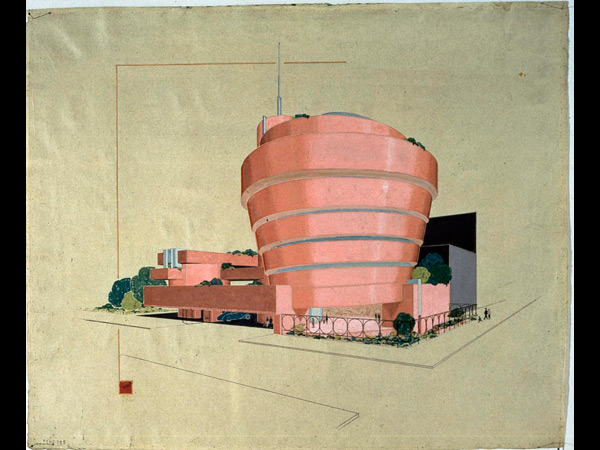
Slate has a very good historical slideshow about Frank Lloyd Wright and the growth and development of the Guggenheim Museum. The focus is unusual as it is as much on the development of the collection as it is about the building itself.

It is astonishing that a museum that is 50 years old still generates controversy, but in many ways the Guggenheim is ur-project that posed the question we still wrestle with: Which comes first, the art or the architecture? It is not surprising where Wright comes down:
architecture is "the Mother-art of which Painting is but a mere daughter"
Artists, and some curators, might differ, as they did, vociferously, when the Guggenheim first opened.

August 11, 2009

Engaging Audiences


This is somewhat off topic, but perhaps is more pertinent than it seems. If we are building museums, it is critical to understand who the museum is for.

The Wallace Foundation's new report on Engaging Audiences focuses primarily on performing arts organizations, but many of the lessons are equally applicable to museums. Much of this is not new, but the report is direct and succinct nd well worth circulating.

August 7, 2009

Gehry on throwing architecture under the bus

Frank Gehry is quoted in an NPR story about the 50th anniversary of the Guggenheim Museum in New York. The story is worth reading on its own as it describes the impact the Wright's design had on the museum world. Most interesting, though, are Frank Gehry's comments at the end:
. . . the architect says, it's getting harder to build works with "spirit, passion and feeling."

"I think that throwing architecture under the bus is being touted by the people who can't do the other," Gehry says. "And this is a great excuse to trash those who can, and say we're through with those guys, and now we're going back to straight simple, minimalist, idiocy again. Cold simple sterility. It's got to be green, though! As long as it's green, you're OK."
I agree that it would be sad to see a return to "straight simple, minimalist, idiocy." But I also think it would be wonderful to achieve more balance, to move past the truly idiotic notion that every new museum must be a unique architectural expression. It would be delightful if every museum could be designed by the likes of Gehry, but even among the architectural luminaries, few can compare with his mastery of both form and function. A few more simple green boxes would meet the needs of many museums and their users at considerably less cost than the bloated attempts at artistic expression that have hobbled some museums.

August 4, 2009

The Future of Museum Architecture?

A recent piece in the NY Times described the conversion of a grain elevator into an art gallery. (“About the only thing we can’t offer, is white walls.”) With the debunking of the "Bilbao Effect" myth that hiring a star architect can transform any city, is this an indicator of a possible return to a more inventive kind of architecture that is rooted in the needs of artists and visitors (rather than the egos of community leaders)?

One of my favorite recent museums continues to be MassMOCA in North Adams, Massachusetts. Not because it is great architecture, but because it is an interesting and surprising place to experience art. Rather than creating a grand statement--"This is architecture" as the new starchitect museums do, MassMOCA encourages dialog between artists and the buildings. This dialog then extends to the visitors and invites them to join in the discussion, rather than simply stand back in awe of the art, or, in too many cases, the building.

Engaged dialog is certainly a more contemporary (and less Medieval) expression of the ways our social discourse is evolving. Facebook and all the other Web 2.0 technologies are transforming the ways people engage with each other and with the organizations and activities they enjoy. Museums are beginning to get on board in digital space ("follow us on Twitter!"). Perhaps the grain elevator project is the latest manifestation of a new, more personal, way of thinking about engaging people with art in physical space?

May 22, 2009

Guggenheim Lego Set!

OK, this is perhaps not quite on topic, but I can't resist. Lego has begun to release a new series of sets celebrating architecture including Frank Lloyd Wright's Fallingwater and the Guggenheim Museum. Info about the sets is here on the Wired Gadget Blog.

April 30, 2009

Witold Rybczynski on the new Smithsonian African American Museum

Witold Rybczynski has an interesting slideshow in Slate on the competition entries for the new African American Museum. He concludes that the winning design "manages to appear both primal and modern and, in some ineffable way, seems right for an African-American museum—respectful of the Mall, yet standing slightly apart."

April 22, 2009

Earth Day: Sustainable Museums Everywhere

Virtually every museum construction project is either going for "green design" or a full LEED rating. As community leaders, this only makes sense. One of the lesser know facts about the LEED system is that you don't have to build a new building or even renovate an old one to become LEED certified. The LEED for Existing Buildings rating system provides guidelines for operations and maintenance that will make an existing building more efficient.

I am reminded of this because I got a message today from president of the US Green Building Council today with an Earth Day challenge for every member:
I’d like to challenge each and every member of USGBC to identify an existing building within your own portfolio to green. Start with the LEED for Existing Buildings: Operations & Maintenance checklist, identify the low-cost/no-cost improvements, and get on the path to greater gains.
The challenge is especially interesting because he poses it in the context of the economic downturn, asking "Has the economic crisis crushed the green movement?" The answer is "No!" Rather, it is a real opportunity to talk about the economic value of going green.
Adobe Systems Inc. is saving $1.2 million annually and getting a 121% ROI on their commitment to green operations and maintenance. How much can you put back in your bottom line?
Information about LEED for Existing Buildings is available here: LEED for Existing Buildings. The checklist is here: LEED EB/OM Checklist. (Note that the checklist is the current version which will be replaced April 27th with the roll out of LEED Version 3.0.)

April 15, 2009

African American Museum Architects Selected


A consortium of four firms, referred to as the Freelon Adjaye Bond/SmithGroup, has been selected to design the new National Museum of African American History and Culture on one of the world's most prominent sites between the Museum of American History and the Washington Monument in Washington, DC.

The selection process was based on a design competition that drew entries from Diller Scofidio + Renfro, Foster + Partners, and Moshe Safdie among others. It is difficult to understand the selected design from the renderings--frankly, the others look more dramatic--but the winning concept is grounded in an understanding that the role of the museum on the Mall is more than a monumental chronicle of African American history, but rather a place to celebrate and explore African American history and culture, a deeply thoughtful response to the program. This museum is long overdue. Congratulations to the winning team!

A few more photos are available at the Smithsonian press office's web site. Additional background information about the project can be found at the museum's site.

April 7, 2009

New approaches to humidity control emerging

The NY Times today has an interesting piece on some new thinking about the role of humidity control in conservation. While they don't go so far as to say 70/50 is dead, there appear to be some new approaches, the simplest being to use more humidity controlled cases and the most interesting being a move towards "smart ventilation," which is essentially going back to how it used to be done before we had elaborate, and now increasingly expensive, HVAC systems. Rediscovering these inexpensive and effective strategies, oddly enough, appears to be the real challenge.

Of course, museums with limited budgets have been finding ways to keep humidity stable for years (fluctuations cause the most damage to sensitive artifacts), the simplest being to seal the space to prevent atmospheric changes from immediately affecting the storage area.


Update:  Here are several other interesting discussions:

The Nothern States Conservation Center on Relative Humidity and Temperature


A piece posted by the National Archives by the father of this discussion, Ernest Conrad: The Realistic Preservation Environment

And here is a good, if technical, discussion of the challenge of Humidity Control in the Humid South.


January 9, 2009

Contemporary Art Museums


It finally hit me in the midst of a visit to the new Museum of Contemporary Art in Denver–all these new contemporary art museums are the same museum!  The architectural program and operational plan for each is practical identical. They differ in architectural expression, although even there they are very much alike–white boxes with varying levels of transparency designed by up and coming architects on relatively limited budgets. What do they have in common?
  • Area of about 50,000 SF divided into several large and several small galleries, a spacious but minimally appointed lobby, two small classrooms/activity rooms, a small and off-beat cafe/bar, a well-stocked store, possibly a 100-seat auditorium or "learning center," funky bathrooms, and back office and support space. 
  • An active exhibit program with risky and not-so-risky artists (both of which are alternately lamented and celebrated in the local mainstream and alternative press).
  • Lots of parties, opening receptions, member nights, and evening hours
  • A membership on average 20 years younger than the local dowager art museum.
  • Minimal or no collections.
This formula has worked remarkably well from an operational perspective because the active and relatively low-cost exhibit schedule facilitates repeat visitation and lures event planners with a constantly changing backdrop for revenue-producing (and membership-enhancing) parties of all kinds. It doesn't hurt that they don't have the spatial and intellectual costs of maintaining a permanent collection, either.

The pattern began to explode perhaps with Zaha Hadid's Contemporary Arts Center in Cincinnati (is there an earlier model?) and continued with the Institute of Contemporary Art in Boston, the New Museum in New York, The Frist in Nashville, Denver's recent entry, and others. The Broad in LA is a traditional museum (LACMA) capitalizing on the trend.

December 17, 2008

Museum Architecture on NPR

 NPR has an excellent story on museum architecture. It features two buildings by Daniel Libeskind, the Denver Art Museum and San Francisco's Contemporary Jewish Museum.

December 11, 2008

Copia museum closes

Photo from a very nice panorama available at Internet Tours.
The Copia museum in Napa Valley has filed for bankruptcy, mostly because they have $70 million in bonds to pay off and only about a third of the attendance that they had projected.  If you are a glutton for punishment, here is another more detailed analysis of the finances and specific issues.  

Sorry for all the bad news. On a happier note, it looks like the Mark Twain House will pull through after national publicity about their overly-optimistic projections and cost overruns on their new building.  Here is an update.  I spoke with someone familiar with their situation yesterday and it looks like the publicity has helped them to attract additional support.

November 18, 2008

The Decordova Museum


I've long wanted to visit the Decordova Museum in Lincoln, Massachusetts (just outside Boston) and never quite got around to it. I'll be back. It was delightful.

Set on the former Decordova estate, the museum is both a sculpture park and a regional contemporary art venue. A wide variety of modern sculpture is everywhere throughout the grounds and invites visitors to explore. The gallery spaces are housed in the mansion house, which sits atop a steep hill at the center of the site, and a modern addition with additional gallery spaces.
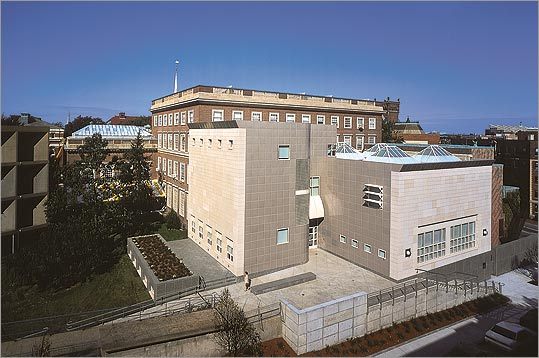
Most interesting from an architectural perspective is the way the architects of the 20,000 SF addition, Kallmann McKinnell & Wood of Boston, connected the mansion house to the parking below. The expansion succeeds because it is sensitive to the site. The entrance is understated but easy to find, the circulation is obvious–a brightly-lit stair open to the landscape, and the galleries provide a variety of larger and small spaces, well suited to the contemporary art on display. The building is nicely detailed, but restrained. It compliments the art, the sculpture, and the landscape, rather than competing for your attention in a place that already has plenty of other attractions.

November 2, 2008

WSJ on Museums and the "new" economy

The Wall Street Journal has a very good analysis of the effect of our current economic problems on art museums, particularly on building projects.  A few quotes:
  • Pressure to expand museums comes from shortsighted donors with an "edifice complex," says Scott Black, a trustee of the Boston Museum of Fine Arts and chairman of Delphi Capital Management. 
  • . . . museum directors say they are actually potentially much more nimble than the cash-strapped orchestra or local theater might be because they have such diverse sources of revenue -- membership income, facilities rental, donations, endowment, admissions and gift-shop sales.
  • The Parrish . . . museum will not break ground until 80% of the target amount is reached through donations. "A decision was made not to take a mortgage" to raise the financing, she says, and now she's glad there isn't one.
  • Meanwhile, the High Museum's Michael Shapiro is thinking far in the future. "We're putting a lot of energy into planned giving, into bequests," he says. In the meantime, the High's annual wine auction is coming in March, and the museum is beefing it up and hoping for record results. People may want to drink more wine in a recession, the director says.

Good stuff all around.

July 1, 2008

"The Perils of Museum Design"


The Boston Globe has a good piece entitled "The Perils of Museum Design" on the vapor barrier problems at Harvard's Otto Hall, home to the Busch Reisinger Museum. Otto Hall is slated to be torn down to make way for a new Renzo Piano addition to the adjacent Fogg Museum.

Otto Hall was built in 1991 with state-of-the-art temperature and humidity control systems. Unfortunately, this was before architects and engineers fully understood how to keep escaping humidity from damaging the building envelope. Apparently the damage to the building was bad enough that it might have been torn down even without the Fogg expansion. Unfortunately, this kind of problem still happens with newly built museums, but seldom makes the national news. 

A relatively good discussion of wall systems can be found in this educational piece for an air barrier company.

Update:  Sadly, these links are out of date. Here are several other interesting discussions:

The Nothern States Conservation Center on Relative Humidity and Temperature


A piece posted by the National Archives by the father of this discussion, Ernest Conrad: The Realistic Preservation Environment

And here is a good, if technical, discussion of the challenge of Humidity Control in the Humid South.


June 26, 2008

Nelson-Atkins Attendance Up

Some good news (and some refreshingly direct discussion) about attendance at the Nelson-Atkins Museum in Kansas City with its new Stephen Holl-designed addition to in this article in the Kansas City Star.

Attendance is up significantly, although not as much as they had hoped, and unlike the Denver Art Museum (article and interview) and the Milwaukee Art Museum (article) both of which found themselves in financial hot water after their expansions, the Nelson-Atkins seems cautiously optimistic about its future attendance.

Aside: I'll see the new building ths summer, but in the meantime loved this quote about it from the director in a NY Times article:  
“It’s distinctive like an icon, but not one of those self-satisfied exhibitionist buildings that beg for applause.”
I hope it lives up to this.

June 24, 2008

Musée du Quai Branly, Paris

When the Musée du Quai Branly first opened two years ago, it generated a great deal of controversy (here in the NY Times, here in the London Review of Books, and here in a piece by an obsequious Nicolai Ouroussoff in the Herald Tribune). The primary criticism was that the museum inappropriately decontextualized aboriginal art–unsuccessfully answering the old question of whether the objects on display are works of art or cultural artifacts.
In a way, the museum punts on this question (which is what Ouroussoff perversely likes about it) by creating a building which use earth tones and organic shapes to create a new "context" for the objects, which are spotlighted almost like exotic birds in a post-post-modern river and forest. I loved many of the objects--they are beautiful and beautifully lit (mostly).  But I also had no idea which region I was in (Is this Oceania or Americas?), never did find the interpretive kiosks, was annoyed by the ever-so-long ramp to the exhibit level that offered neither artifacts nor interpretation, and couldn't find the exit when I was ready to leave. But this isn't about me.

A few observations:  
  • Unlike many new US museums, Quai Branly doesn't seem to be set up to be a venue for parties and other events.  The lobby is small and unassuming and the exhibit area is cramped–there is no good place for a party. The focus is on getting people in and out of the formal exhibit area.
  • Ticketing is outdoors (fine in June) and has only three stations.  Capacity control appears to take place  in the ticket queue.
  • The visible storage cylinder that runs up through the west end of the museum was ignored by everyone.  Dim lighting and densely packed artifacts did not draw anyone's attention.
  • I couldn't help thinking "This is what the Smithsonian's National Museum of the American Indian might have been without the Indians."  (And I won't elaborate on that comment as it would be a much longer post.)
  • I liked the building. Despite its bulk, it was inviting and functional.
  • The "architecture to exhibit area" ratio was very high–this was not an efficient museum.
I came away wondering "What exactly were they trying to accomplish here?"  If, as some suggest, the museum is largely a monument to Jacques Chirac, then it is certainly successful. Perhaps because it is a monument, Quai Branly is clearly a new "destination museum" for Paris. As a destination, I think the museum is successful–the combination of unique building and exotic artifacts provides an experience unlike any other in Paris (or anywhere else, for that matter). Quai Branly is different enough (and centrally located enough) that it may well have a happy life as "that interesting museum over by the Eiffel Tower." But, given the richness of the collections and the scale of the investment, it seems like it could have been much, much more.

June 23, 2008

21st Century Museums Exhibit

The Louisiana Museum of Modern Art in Denmark has an exhibit up about Museums of the 21st Century. The focus is more accurately the last 20 years of art museums, but the illustrations from the catalog are interesting. Here is a review of the exhibit.


May 14, 2008

Renzo Piano's High Museum addition

I finally had a chance to see the new expansion to the High Museum of Art in Atlanta, designed by Renzo Piano as an addition to Richard Meier's design for the original building. I visited after closing, so couldn't see the galleries, but I did get a sense of how the new building works with the old.


The new entrance courtyard is classic Piano, understated, restrained, and lovingly detailed.  Without the posters on the facade, there is little that announces that this is a major museum.
 
As you come into the courtyard, however, the detailing begins to suggest that this is a special place.
The modernist pergola here provides a little shelter and also helps transition into the the outdoor seating area for the restaurant, which also serves the Arts Center. 


(The restaurant was beautiful, the food disappointing.)

Next trip to Atlanta, I'll be sure to get inside.


May 13, 2008

Cleveland Institute of Art over budget

Continuing a running theme of cautionary tales, the Cleveland Plain Dealer reports that the cost estimates for the new Cleveland Institute of Art are "'well north' of the $55 million budgeted for the project." Apparently initial estimates showed the "large, steel-framed glass structure that arched up and sideways at the center like a gigantic inchworm" could be built within the budget, but a second estimate determined that "required space for ramps added to the building’s size and cost as did the complicated steel framing needed to create the arch." While this will be a challenge for the museum, it is far better to get a realistic budget before construction begins. Pictures are here. (Note: technically, this is not a museum building, it is primarily studio space, but the issues are very much the same.)

April 19, 2008

The Best and the Worst

The best and the worst new museums of 2007 according to Martin Filler. He gives high marks to SANAA's New Museum of Contemporary Art in New York City and low marks to Coop Himmelb(l)au's Akron Art Museum addition.

April 15, 2008

Failed Icons

Witold Rybczynski's slideshow about "Failed Icons" on Slate last year offers words of caution for anyone seeking to create an architectural icon:
According to Charles Jencks, the author of Iconic Building, . . . iconic buildings [are a] delicate balancing act between what he calls explicit signs and implicit symbols, that is, between an unusual, memorable form and the images it conjures up. He emphasizes that in an increasingly heterogeneous world, multiple and sometimes even enigmatic meanings are precisely what turn a building into a popular icon.

What Jencks does not say, in his altogether too polite book, is that this balancing act is extremely rare—for every successful icon there are scores of failures.

Well worth a quick read.

April 7, 2008

Jean Nouvel wins the Prizker

I am late to this one, but the French architect Jean Nouvel has been named this year's Pritzker Prize winner, an honor that is frequently equated to the Nobel Prize for architecture.

From the press release: "For over 30 years Jean Nouvel has pushed architecture’s discourse and praxis to new limits. His inquisitive and agile mind propels him to take risks in each of his projects, which, regardless of varying degrees of success, have greatly expanded the vocabulary of contemporary architecture."

I have not been here yet, but his best known museum project is the controversial Musée du Quai Branly in Paris. Here is the Times on it.